My goal for The Vampire Soirée was to write a self-contained 5e module that subtly encourages its Player Characters to investigate in the direction the Dungeon Master wants them to investigate. At the same time, I wanted to create the illusion of an expansive world where anything is possible.
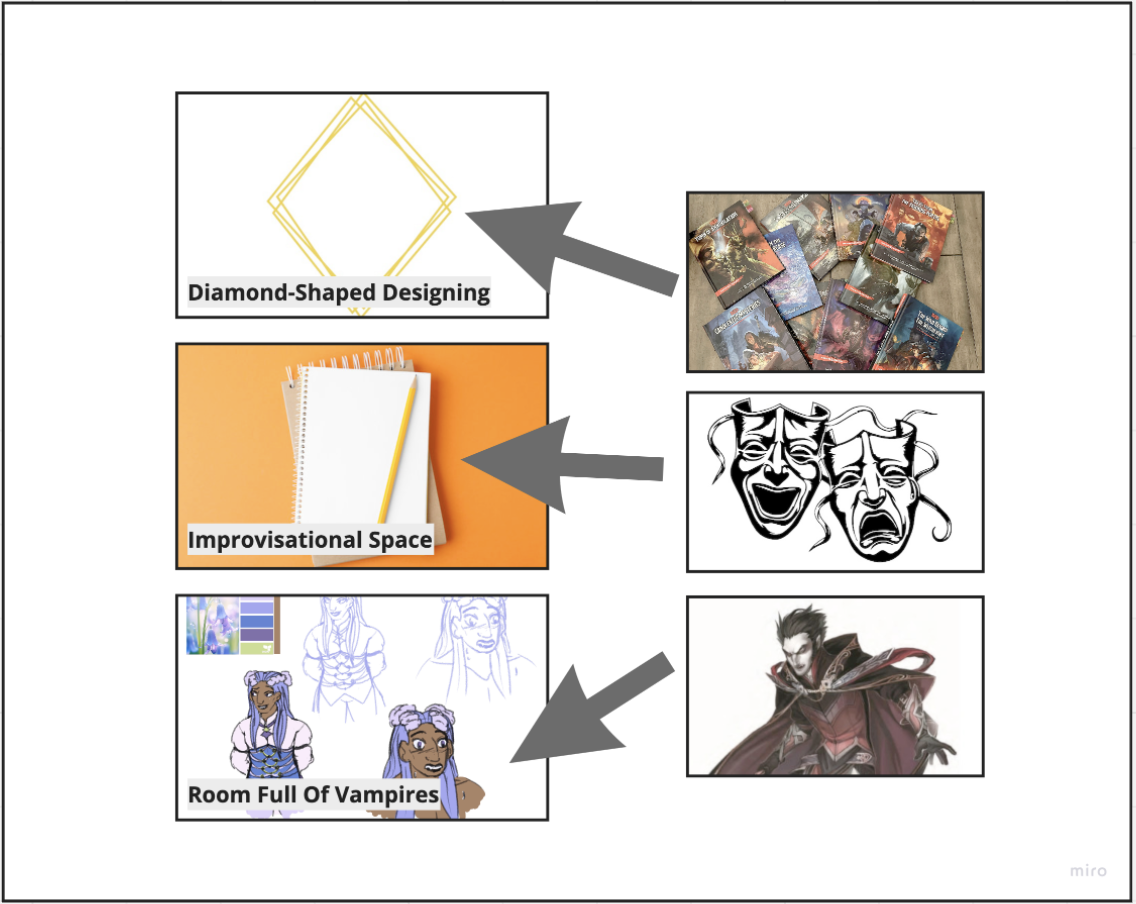
Diamond-Shaped Designing:The Vampire Soirée needs to feel fleshed-out and full of options while only truly holding a few viable paths for a player to take.
Improvisational Space: I want the Dungeon Master to have clear guidelines, but to also have some room to personalize the adventure to their table.
Room Full Of Vampires: I infuse each NPC with clear, succinct personality conveyed in as few words as possible.
Throughout this process, I’ve sought regular feedback from Kelsey Kirvan (Suckerpunch), who taught me diamond-shaped design.
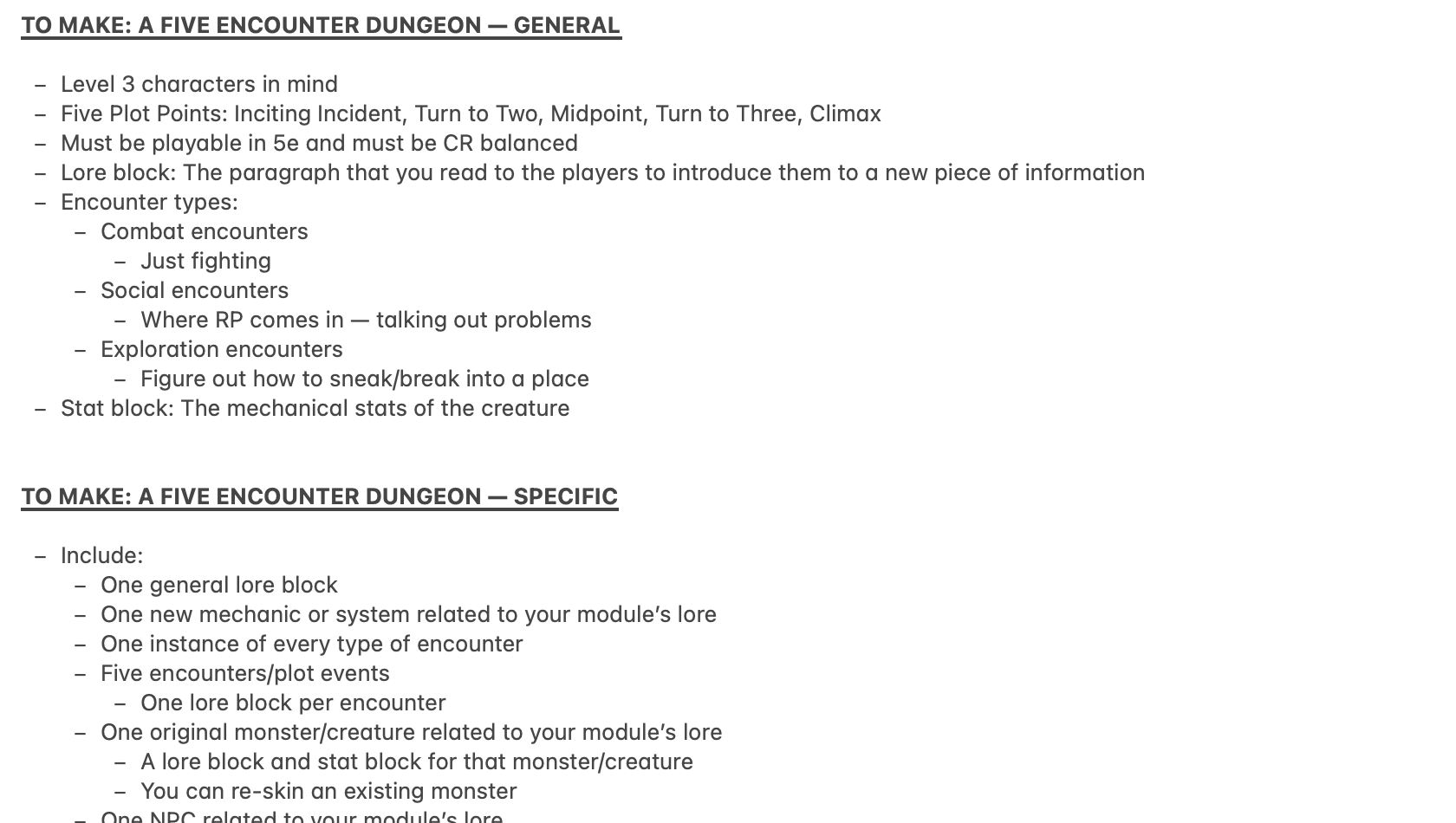
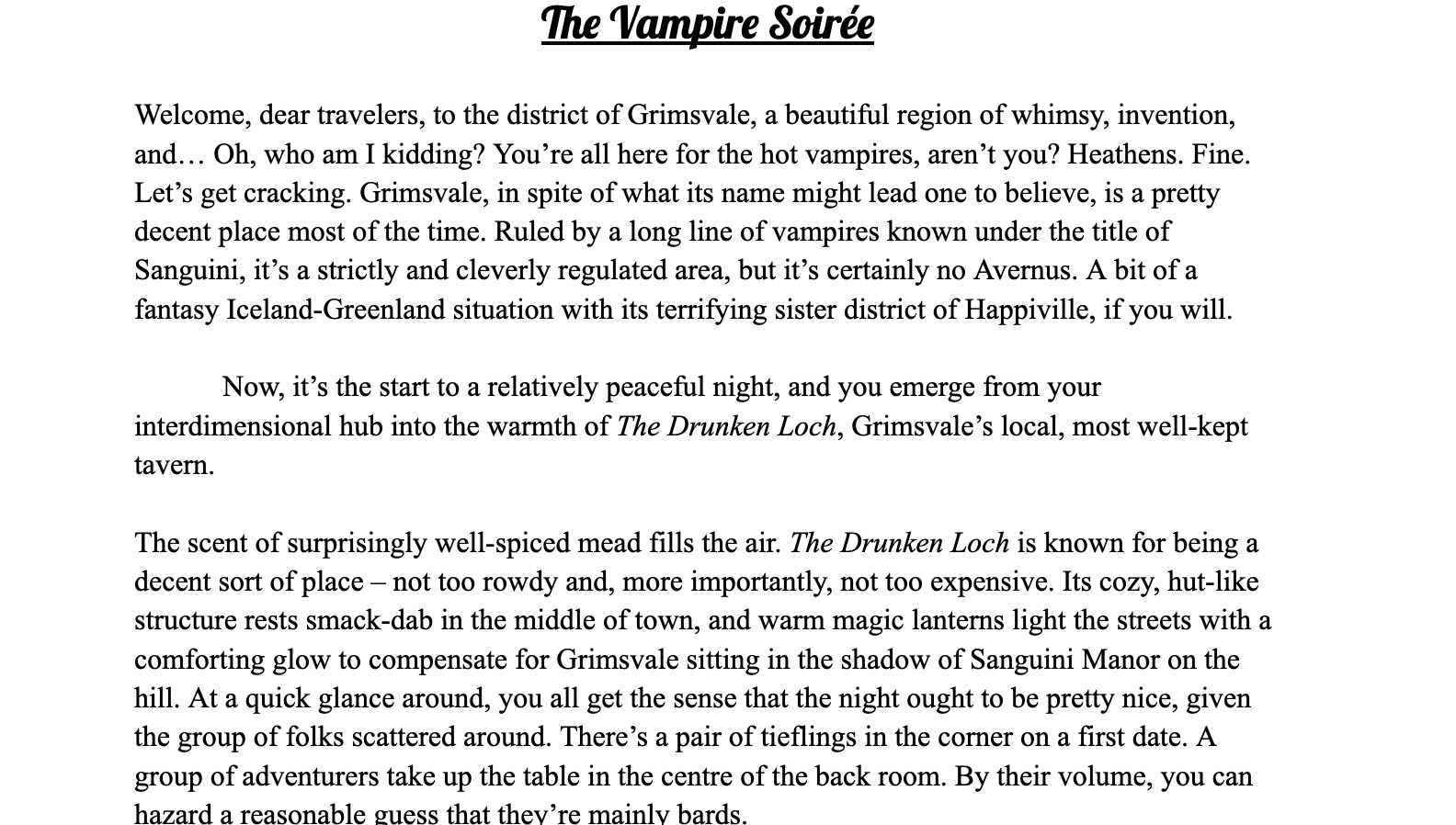
Overview & Technique Highlights
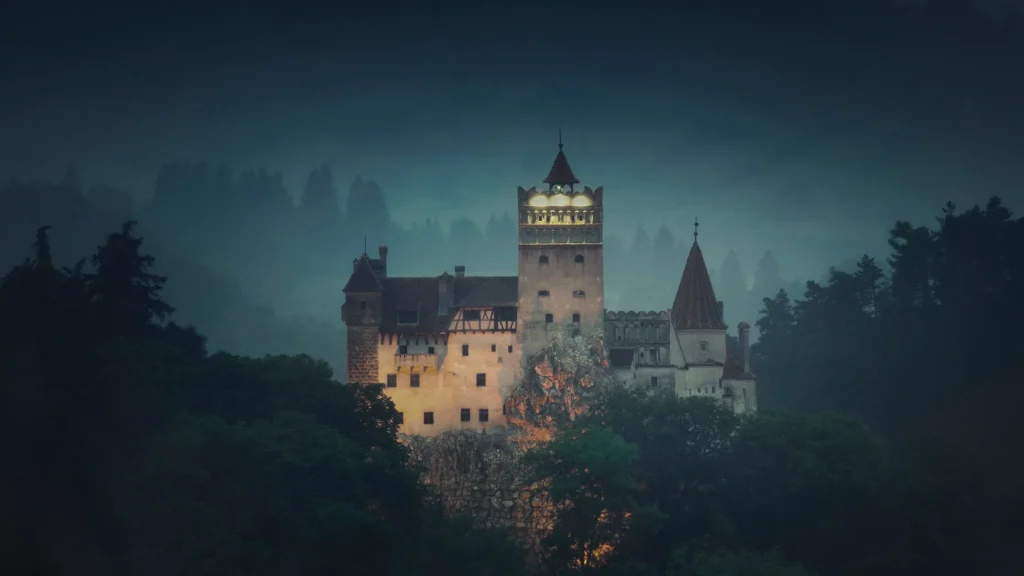
Dracula's Castle – Photo by AirBnB
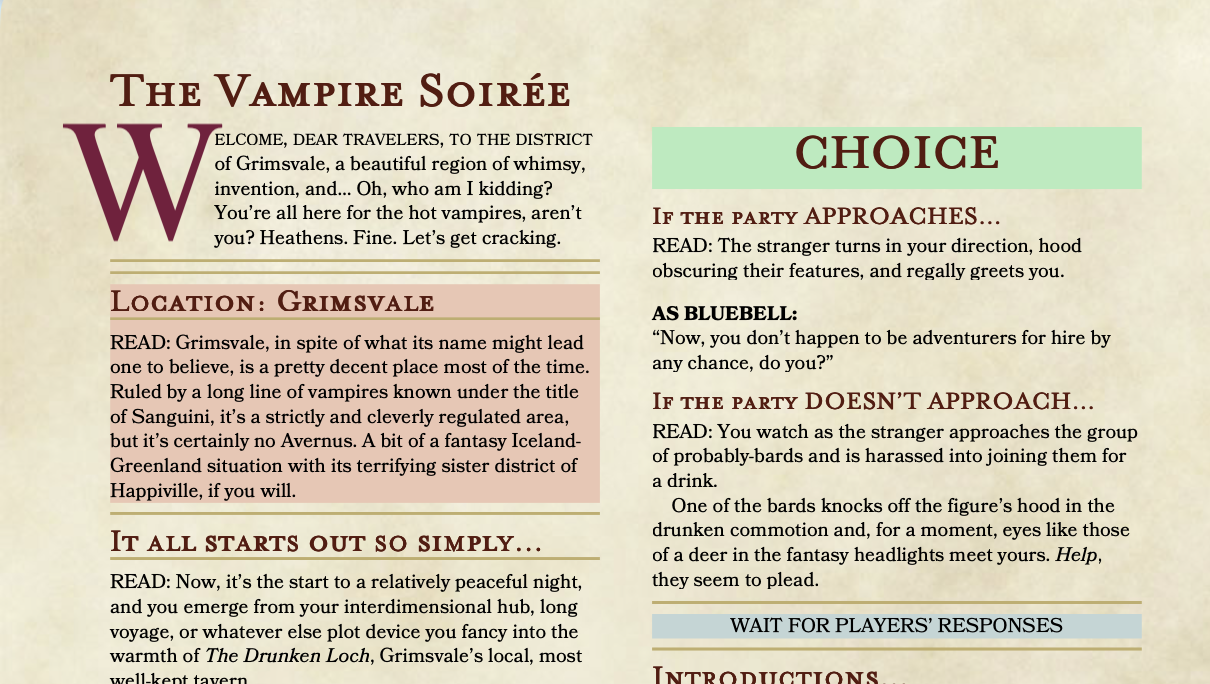
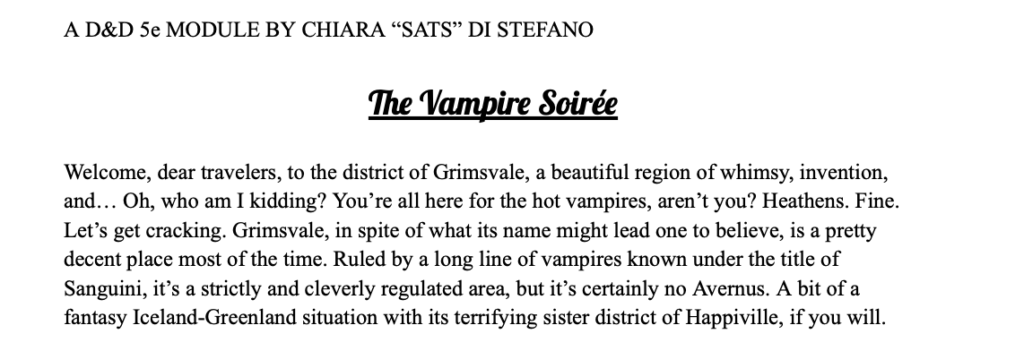
Game Premise: Welcome, dear travelers, to the district of Grimsvale, a beautiful region of whimsy, invention, and… Oh, who am I kidding? You’re all here for the hot vampires, aren’t you? Heathens. Fine.
In The Vampire Soirée, a daring party of adventurers must prevent the murder of the young heir to the bloodsucking Sanguini line – all the while avoiding getting kicked out of the party where the assassination is allegedly meant to take place. There’s hot vampires. There’s ghost bartenders. There’s a reference to The Muppet Show. Welcome to Grimsvale. Enjoy your stay!
Technique Highlight 1: Easy-to-Learn Mystery
Goal: I intended for a DM of any experience level to be able to pick up this module and run it with minimal prep.
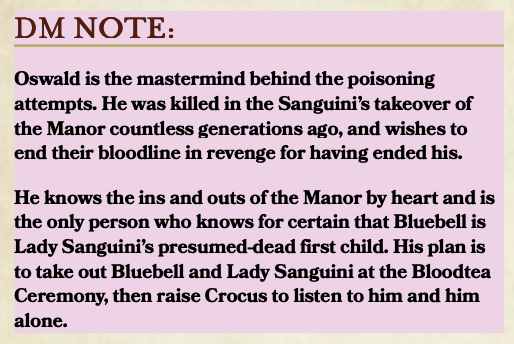
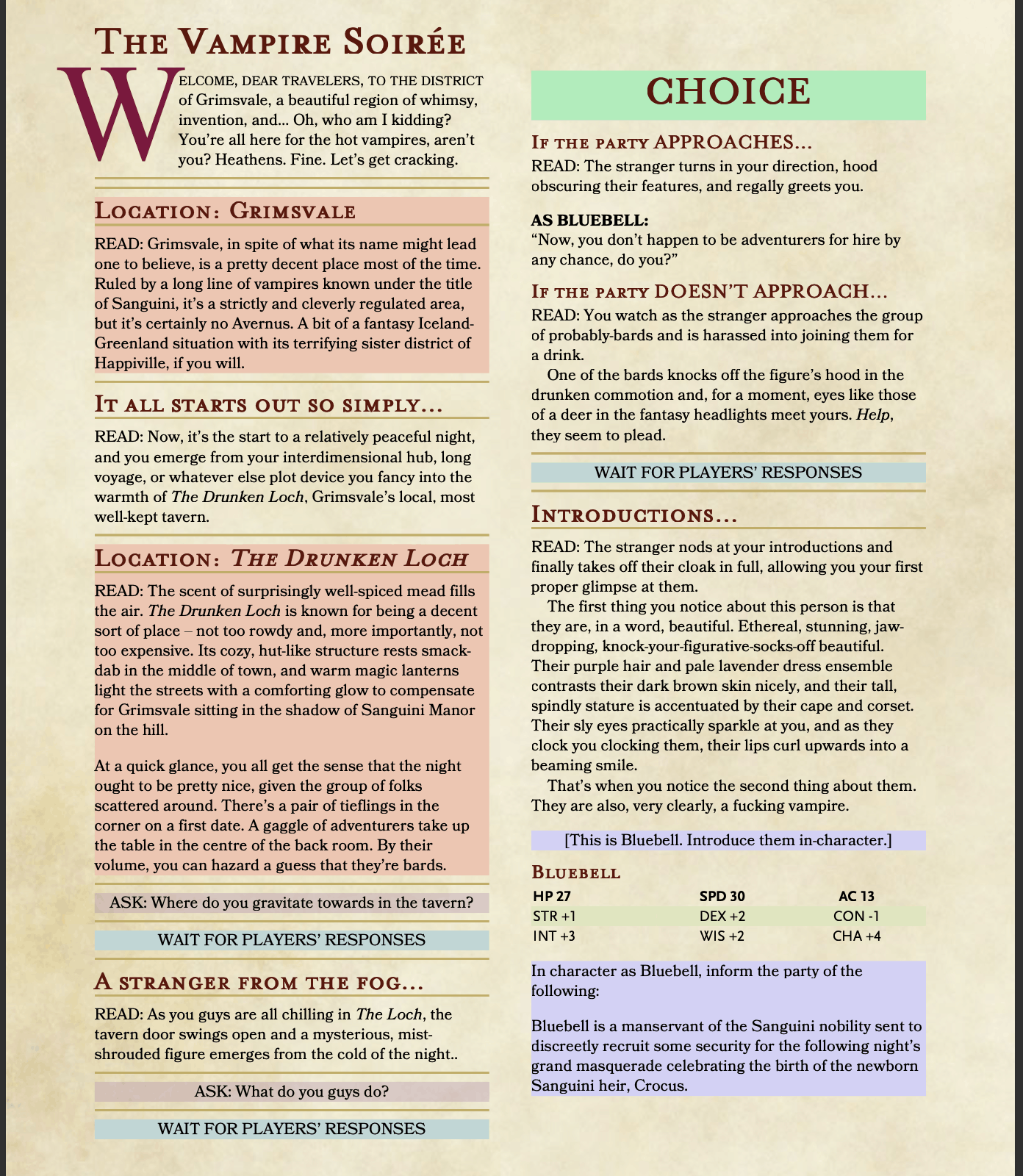
Result: I made clear, precise notes on characters, motivations, and events for the DM as they became relevant in the module.
Techniques
Boldedtext meant forthe DM‘s eyes only.
Brought up information only when it was pertinent, so as not to overwhelm anyone reading.
Technique Highlight 2: Illusory Choices
Goal: I wanted players to feel like they had an abundance of choice… choice that the module would have already accounted for.
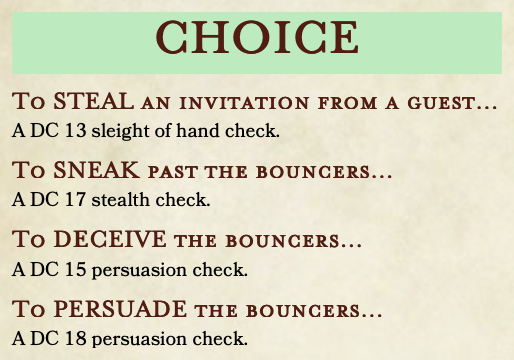
Result: I employed principles of diamond-shaped branching design in order to subtly guide players to the conclusions the module wanted them to draw.
Techniques
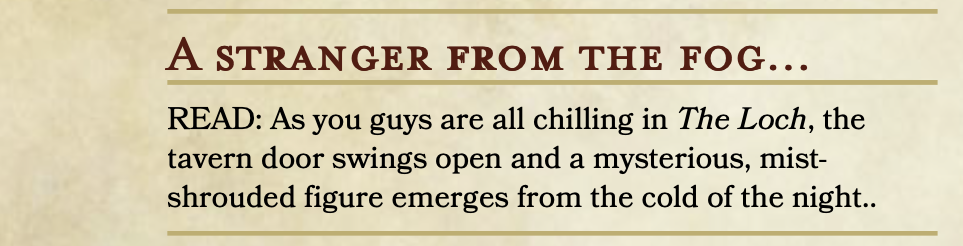
Wrote certain characters’ dialogue and lore blocks that hints at where player characters should go to be read as written.
Made sure to consistently write junctures in the module where the DM is to ask the party what they’d like to do.
Technique Highlight 3: Homebrewed Mechanics
Goal: I had to come up with a homebrewed mechanic to implement in my module as per the specifications of the project it was for.
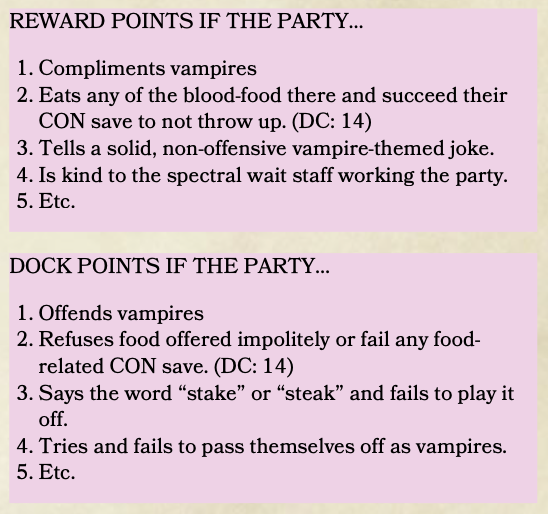
Result: I invented Sociometry Points, a mechanic that would encourage players to get into the vampiric spirit, as it were.
Techniques
Rewarded players for roleplaying by awarding and docking “SocioPoints” for various actions.
Encouraged players’ sense of wonder and mystery by not fully having the DM explain the rules for earning and losing said SocioPoints.
Built up players’ creativity by being flexible with the rules of the Sociometry mechanic.
Process Breakdown
1. Research, Theme, & Initial Ideas
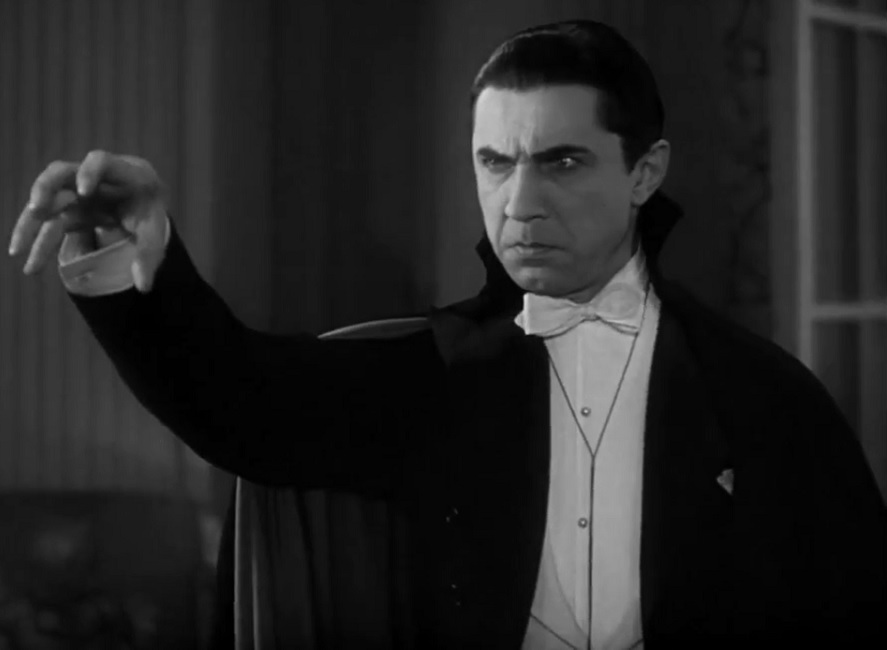
Bela Lugosi as Dracula
I knew I wanted to write a silly vampire masquerade adventure for my 5e module.
Analyzing Media: I looked to vampire media (from Dracula to Twilight) to find classic conventions and tropes around the mythical figures.
Ideating Mechanics: I came up with the idea of Sociometry in order to encourage non-combat roleplay throughout the adventure.
Turning Up The Camp: I wrote the module in a very specific voice and often broke the fourth wall in order to convey the correct tone to the DM and players.
2. The Initial Parameters
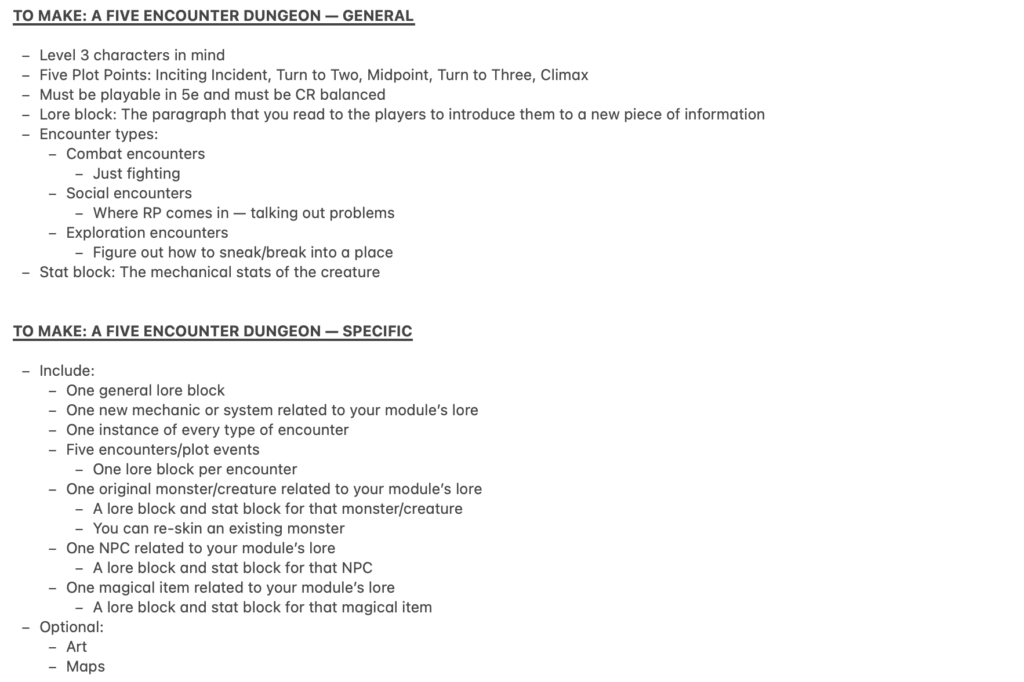
General Objectives: I was assigned to make a 5e adventure for a four-player, level three party that included combat, roleplay, and exploration.
Specific Instructions: I had to include in this module…
One homebrewed mechanic
At least one homebrewed (and/or reskinned) monster
At least one homebrewed magical item
Lore blocks for multiple original:
Locations
NPCs
Encounters
3. Ideation & Iteration
The NPCs
Result: Invented a vibrant cast of characters for players to interact with on their adventure.
Goal: To create compelling NPCs that players will want to talk to.
Solution:
Came up with catchy, concise introductions for every NPC.
Gave each character unique quirks that shone through in their first interactions with the party.
The Setting
Result: Set a tone by describing the locations in Grimsvale in a particular tone to make them sound silly and homey.
Goal: To convey theme and tone through the module’s atmosphere and narration.
Solution:
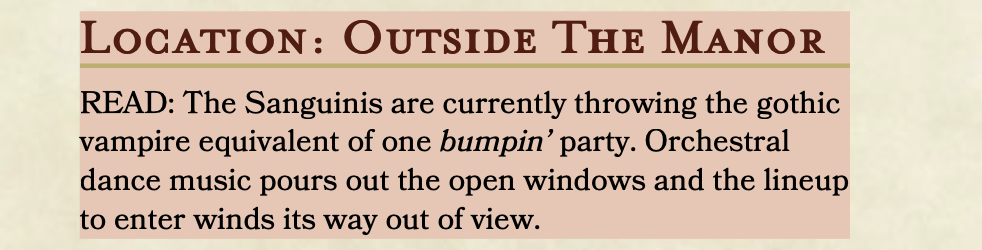
Often broke the fourth wall and joked when describing locations.
Used alluring and comforting adjectives when setting a scene.
The Mystery
Result: Plotted a self-contained mystery that ramps up in tension as the module goes on.
Goal: To make a case that is solvable by the party while not being too easy to figure out.
Solution:
Allowed players multiple paths to investigate and understand the case.
Created a “parlour room reveal” moment at the crux of the adventure in case players have yet to have solved things.
4. The Adventure v.1.0
Result: Finished the first draft of the adventure for The Vampire Soirée.
Goal: To finish the module and have it be playtestable by a party.
Implementation:
Mechanic Synergy: Sociometry as a homebrewed mechanic, where offending one’s hosts will earn the party punished.
Narrative Synergy: The framing of the mystery through the lens of a line of succession clarifies the goals and duties of the party.
5. Playtesting Feedback & Key Iterations
Playtest Feedback #1
Positive Note: Players enjoyed the wide variety of antics they were able and allowed to get up to, such as sneaking into the masquerade.
Aspect To Improve: The pacing was a little slow near the beginning; the party could have gotten to the masquerade a little sooner.
Implemented Solution: Created options for the DM surrounding how to get into the masquerade that they can suggest to the party if needed.
Playtest Feedback #2
Positive Note: Players really liked the tone, settings, and NPCs that they got to play around in and with.
Aspect To Improve: More in-character consequences for rolled failures could and should have been enacted for the party.
Implemented Solution: More clarity was integrated into the module regarding the punishments for losing Sociometry Points.
6. Polished Portfolio Piece
The Final Module
Results: Wrote a complete, self-contained DND 5e adventure.
Goal: Design a fun, exciting module that anyone can run with minimal prep.
Execution:
Clear Mystery: Any DM ought to be able to run this mystery with relative ease.
Interesting Mechanics: I created Sociometry to enhance the immersion of the experience.
Strong Voice: Roleplay and getting into the spirit of the adventure is encouraged by the tone of the module itself.