My goal for Underworld Blues was to script the tutorial level of an original detective RPG. At the same time, I wanted the script and gameplay to highlight the themes of its story.
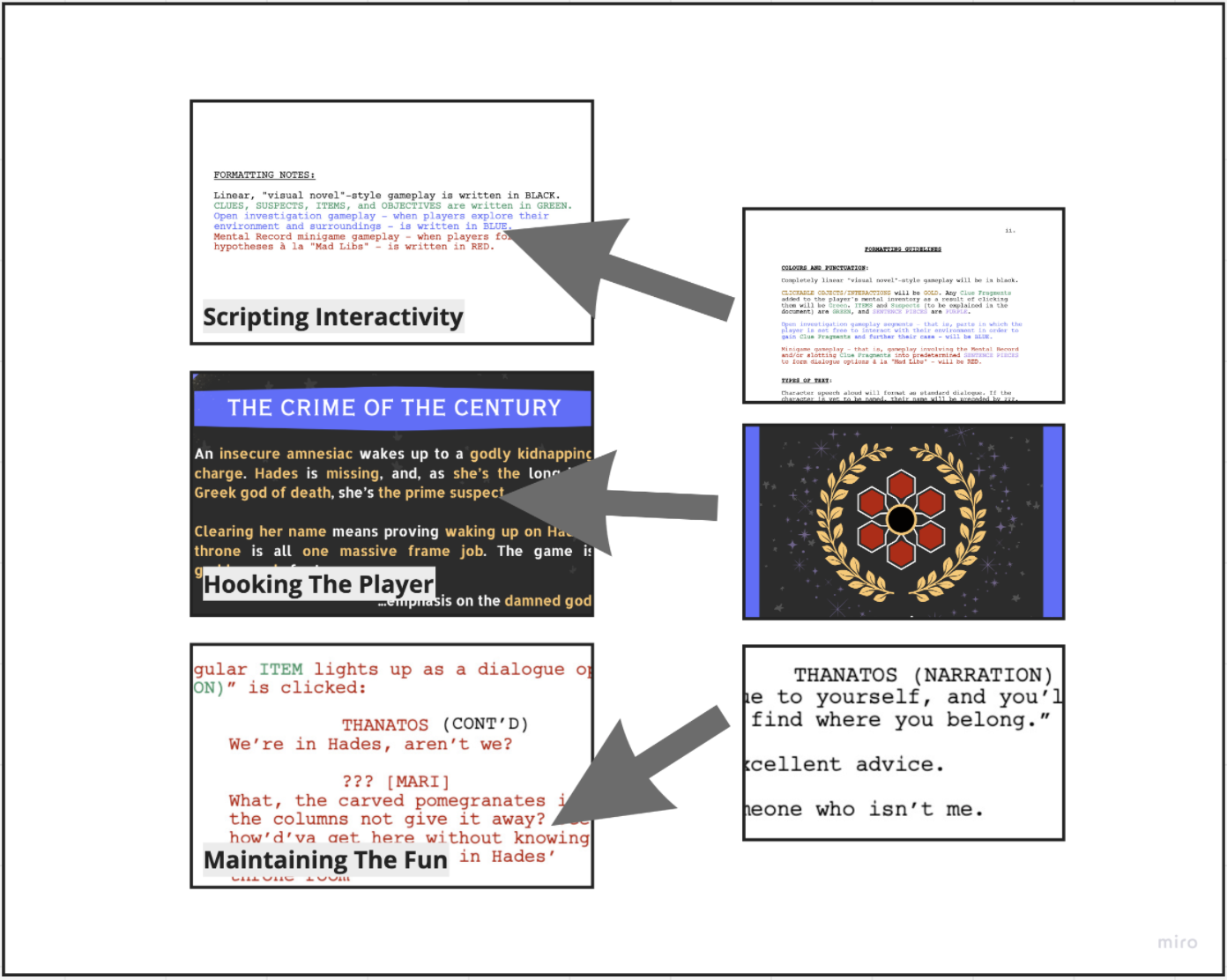
Scripting Interactivity: Underworld Blues is an interactive game being written in a linear tool. I need to figure out how to clearly and concisely make that interactivity comprehensible.
Hooking The Player: I intend on throwing the player right into the action so they immediately get immersed in the world of the game.
Maintaining The Fun: This game is heavily stylized in its voice and tone. I must therefore communicate theme and plot efficiently within those parameters.
Throughout this process, I’ve sought regular feedback from Ariadna Martinez (Horizon Forbidden West), who helped guide me through the process of implementing formatting guidelines for my game scripting that actually make sense as well as making the script as tight as it could be.
Overview & Technique Highlights
Game Premise: An insecure amnesiac wakes up to a godly kidnapping charge. Hades is missing, and, as she’s the long-lost Greek god of death, she’s the prime suspect.
Clearing her name means proving waking up on Hades’ throne is all one massive frame job. The game is goddamned afoot…
…emphasis on the damned god.
Technique Highlight 1: Formatting Simply
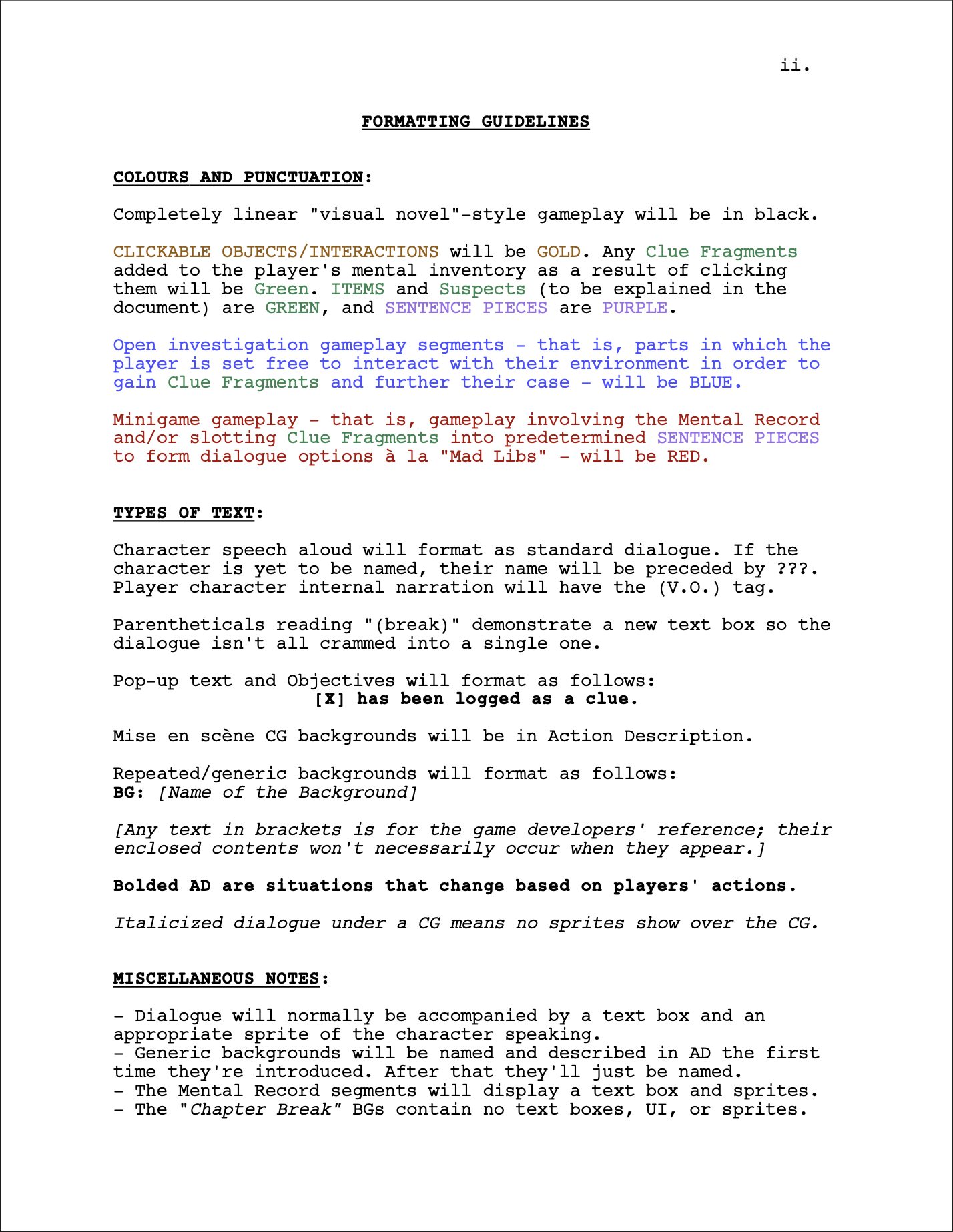
Goal: I wanted readers to easily be able to understand everything going on in the script at all times.
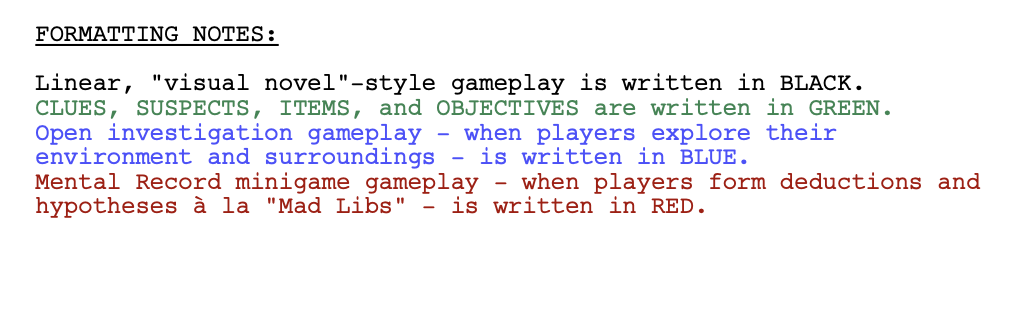
Result: I simplified my formatting guidelines so they can be read and understood at a glance.
Techniques
Colour-coded the different segments of gameplay to make them easily identifiable at a glance.
Ensured branching paths connect back to a single entry point relatively quickly so no reader will lose track of what path is being followed.
Technique Highlight 2: Getting Right To The Action
Goal: I intended to give the player active gameplay within their first minute of booting up the game.
Result: I presented the player their first interactive minigame by the second page of the script.
Techniques
Made the character introduction that situates the player in the narrative as concise as possible.
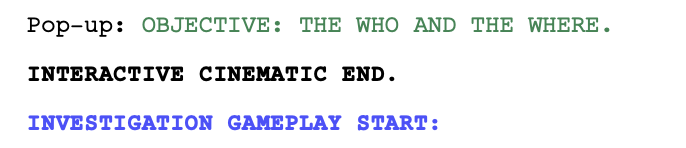
Gave the player an objective right as the interactive gameplay begins to guide them through what they should be doing.
Technique Highlight 3: Bringing The Style
Goal: I ensured the voice of the script was consistent throughout.
Result: I wrote snappy dialogue that presented the theme in a pithy manner matching the tone of the game.
Techniques
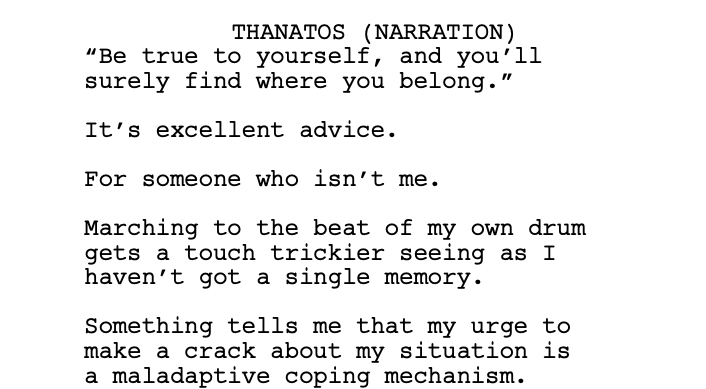
Stated the theme of the game in its very first line.
Cloaked the plot’s hook in humour so as to avoid boring exposition.
Process Breakdown
1. Research, Ideation, & Theme
I knew I wanted to write the tutorial level of a snappy Greek myth detective game about discovering yourself.
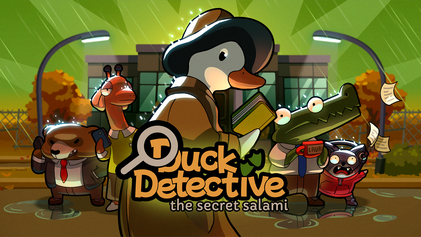
Analyzing Games: I looked to the investigation mechanics from games like Duck Detective: The Secret Salami and Tangle Tower as well as Ace Attorney: Investigations in order to devise my own case-cracking gameplay.
Ideating Formatting: I’ll trim down my formatting into three simple gameplay segments (Interactive Cinematics, Investigation, and Mental Record Minigame) in order to keep the script legible.
Resonant Theming: So that I might convey the theme clearly and concisely, I know I’ll have to write it into the script in the very first line of dialogue.
2. The Initial Design Document
Premise: I started out by figuring out my theme and characters for Underworld Blues, then found mechanics and a storyline that would fit them while keeping the player active, such as:
Investigation Segments
The Mental Record Minigame
An amnesiac plotline
Theme: I knew I wanted Underworld Blues to be about identity and self-discovery. Making it a detective game seemed the perfect way to allow those themes to shine.
3. Writing Draft One
The Initial Draft
Result: Wrote and formatted the first fifteen pages of the tutorial level of Underworld Blues.
Goal: To figure out how to format the interactivity in a linear script.
Solution:
Colour-coded the text describing the different styles of gameplay.
Used italics and bold text to differentiate when sprites should be onscreen or not.
Notes For Edits
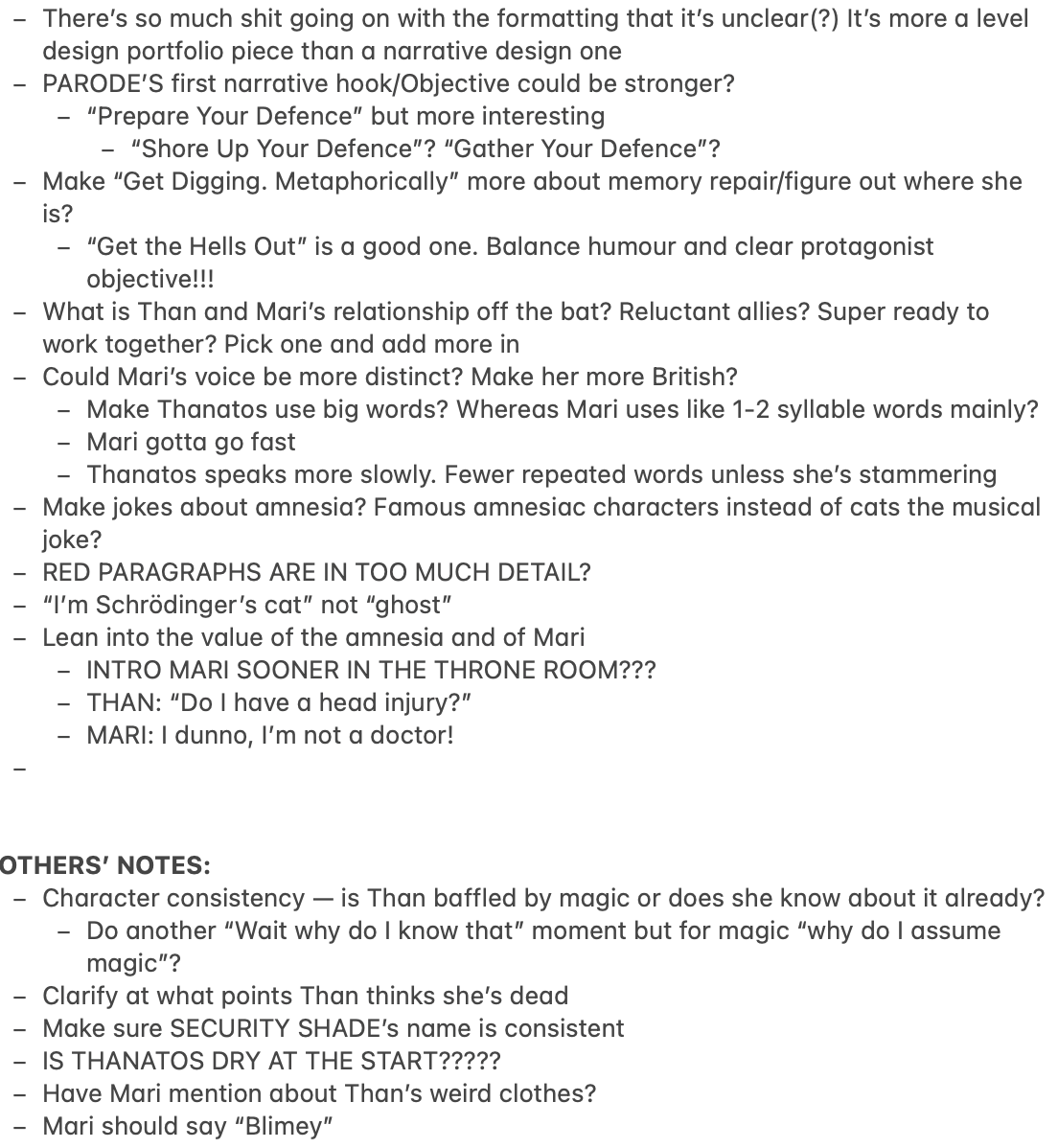
Result: Made a list of all the notes I got regarding my first pass at Underworld Blues‘ game script.
Goal: Find an efficient way to rewrite the script while implementing said notes.
Solution:
Heavily reduced my amount of formatting to make reading the script simpler.
Introduced the character of Mari sooner to give the player character someone to bounce off.
4. The Final Draft
Final Draft Formatting Guidelines
Result: Wrote a final draft of the tutorial level that was much clearer and more concise.
Feedback: Readers enjoyed the new formatting as well as the earlier introduction of the NPC Mari.
5. Polished Portfolio Piece
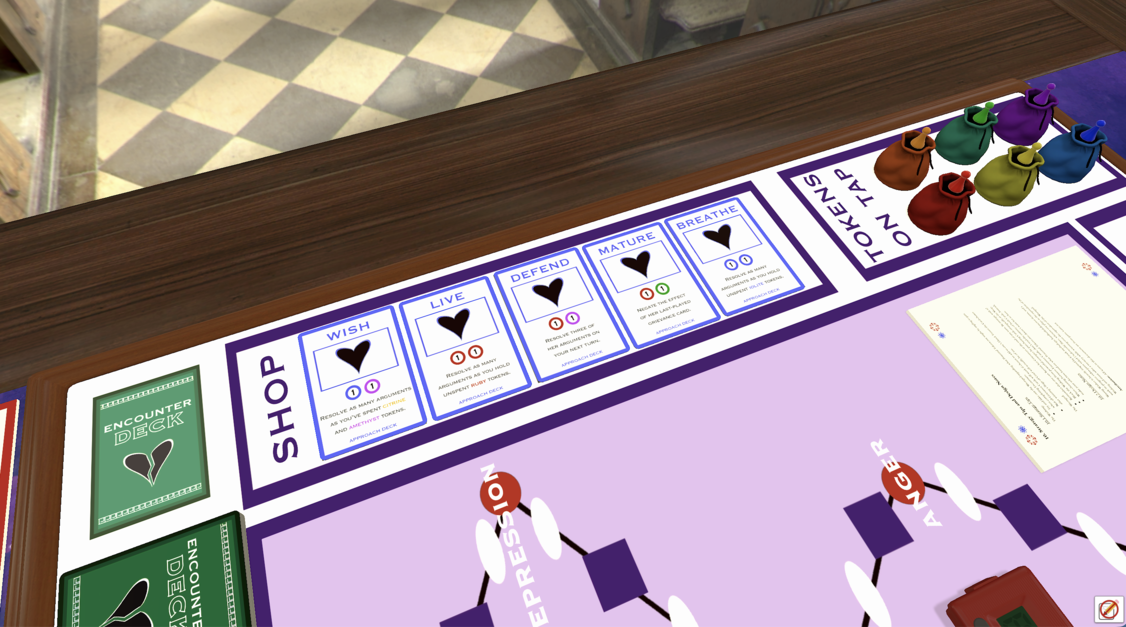
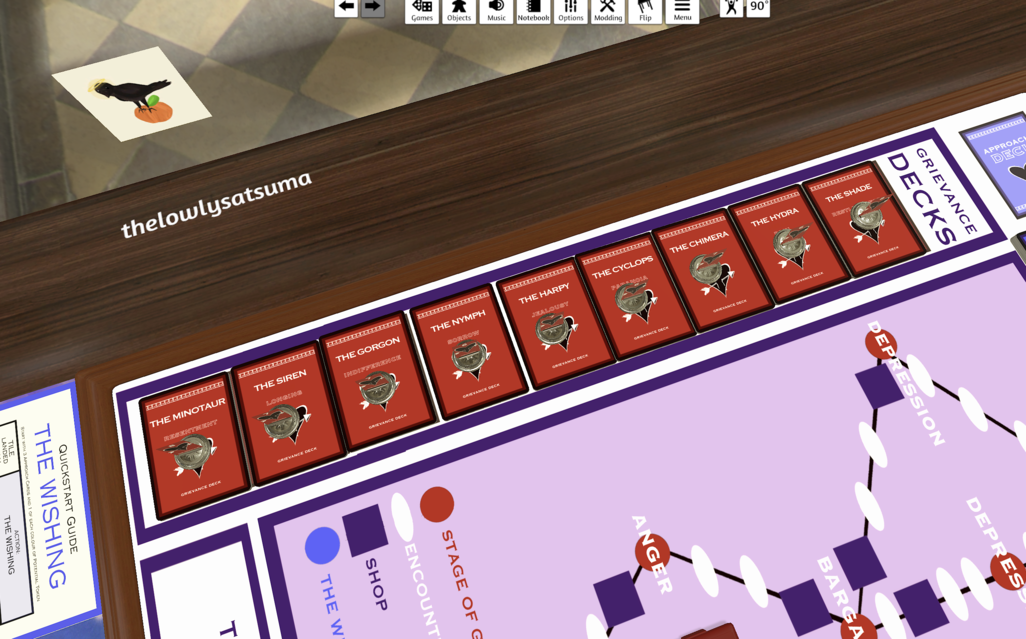
Board Highlights
Full Board
Results: [RESULTS]
Goal: [GOAL]
Execution:
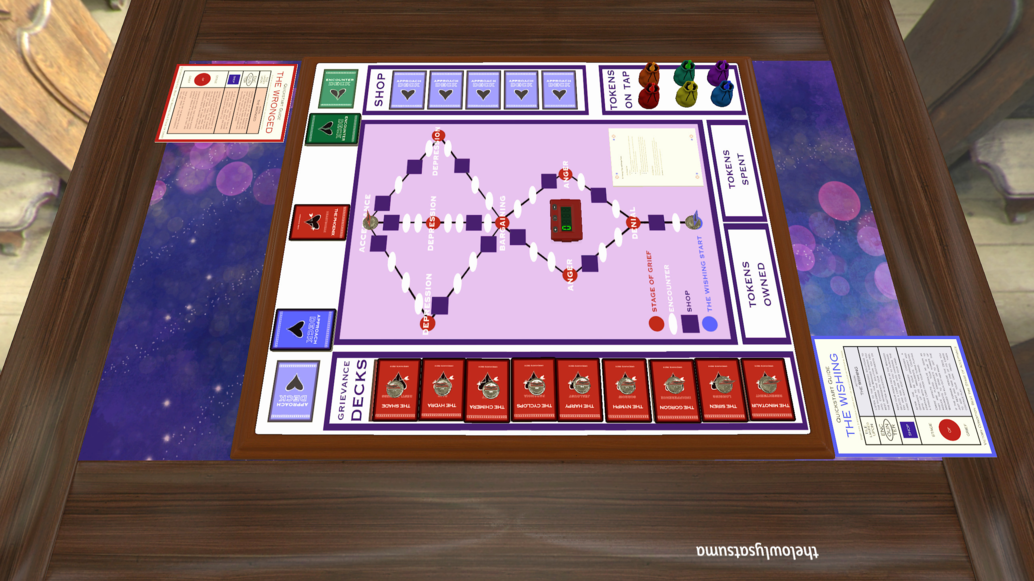
Deck Built By Her: Your opponent buys you the cards you’ll be using to defeat her.
Replay Factor: No two games will have identical battles due to how the bosses ability are swapped out each run.
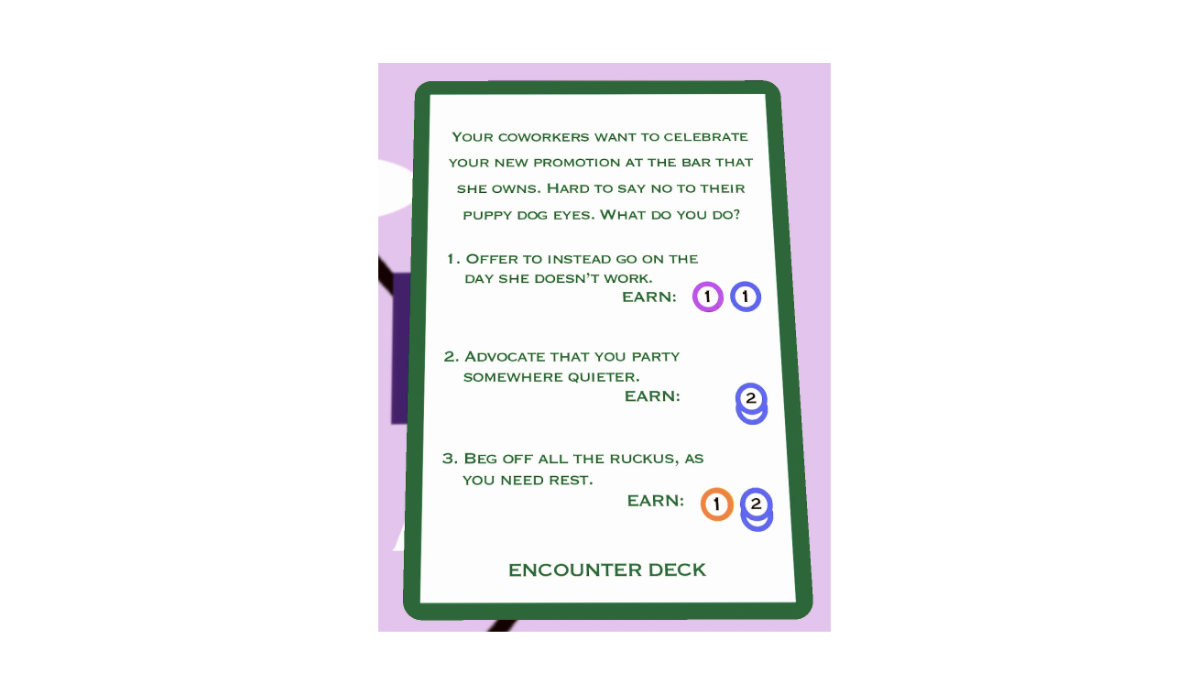
Intentional Theming: Every piece in the game is carefully flavoured to align with the fantasy of winning back — or winning over — a heart.